The Creative Pipeline
Thirty-Two ads in one day, every claim traced to a dated file
Four client batches shipped through the same seven steps on 14 August 2026. Not one ad in any of them was written from memory.
The challenge
Most ad creative is written from memory. Somebody who knows the accountroughly writes a headline that sounds right, a number gets attached because it also sounds about right, and a week later nobody can say where the number came from. That holds up until a regulated client is involved, at which point the ad is a liability, or until a buyer asks whether the figure is real, at which point the silence is the answer.
The second failure is quieter. A batch of eight ads written in one sittingtends to be one ad written eight times: same angle, same promise, same objection answered over and over with the words rearranged. The account spends money on eight placements and learns one thing.
Both problems have the same root, which is that nothing was decided before the writing started.
What we built
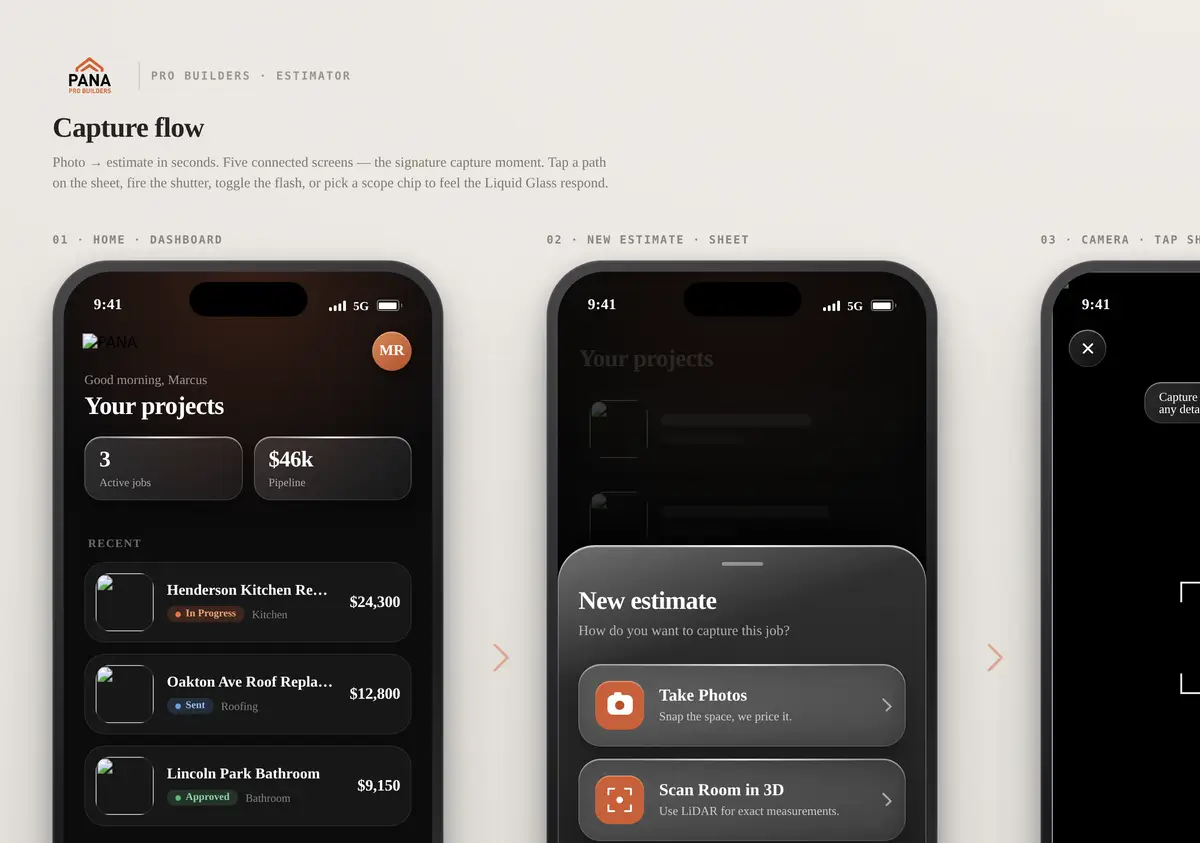
Seven steps, run on every account, in order. Thirty-two creatives went through them in a single day on 14 August 2026 across four client batches: MVP Truck Parts, Starr Injury Law, Pana Pro Builders and Sofa Co.
01 Research, and it is the slow part. A live scrape of the client’s own business, a Google Business Profile pull, the competitor set, and the actual reviews exported to a file. Not a brief written from a discovery call. The reviews matter most, because the words a customer already used about the business are better than anything an agency will invent about it.
02 Personas, six to eight per client, each with a stated objection. The objection is the part that does the work. A persona without one is a demographic, and a demographic cannot be argued with. A persona whose stated objection is a contractor who stopped answering halfway through the job tells you exactly what the ad has to overcome.
03 Angles, one per ad, no repeats across the batch. This is the rule that stops eight ads becoming one ad. Each creative in a batch takes a different angle at a different persona’s objection, so the batch covers ground instead of covering itself.
04 Hard rules, written before anything is generated. Banned phrases, brand law, and whatever the client’s regulator requires. For the Starr Injury Law batch that meant no outcome guarantee, no invented case result, no banned phrase such as “maximize your recovery”, no contingency-fee reference, and the required disclaimer wherever an outcome is implied. Those constraints go in at the top, so the ad is built inside them rather than cut down to fit them afterwards.
05 Generate, three options per decision. The strongest is picked and the reason is recorded.
Recording the reason is what makes the next batch faster, because theaccount accumulates a record of what was chosen and why instead of starting from taste each time.
06 Claim check, every figure sourced to a dated file. From the MVP Truck Parts batch: ad 6 claimed “4.8 stars from 820 real Google reviews”, and that figure traces to a Google Business Profile pull dated 2026-08-14. Every number in every one of the 32 creatives carries a line in that shape. A figure that cannot get one does not go in the ad.
07 Compliance, a four-column pass per ad before release. Outcome guarantee, banned phrase, invented result, disclaimer added. Every ad in a regulated batch is checked against all four before it leaves. All eight in the Starr Injury Law set came back clean.
That is the reason a law firm can run this creative without hearing fromthe bar about it. Nothing in the process is clever. It is written down, and it happens in the same order every time, on every account.
One thing has to be said plainly. All 32 of those creatives are produced and none of them is running. No campaign has been launched from any of the four accounts, so no Ads Manager record, cost per lead or click-through rate exists for any ad on this page.
The deliverables
- 01 Research: live scrape, Google Business Profile pull, competitor set, reviews.csv
- 02 Personas: six to eight per client, each with a stated objection
- 03 Angles: one per ad, no repeats across the batch
- 04 Hard rules: banned phrases, brand law, regulator constraints
- 05 Generate: three options per decision, the strongest picked, the reason recorded
- 06 Claim check: every figure sourced to a dated file
- 07 Compliance: a four-column pass per ad before release
How it ran
- 14 August 2026Four client batches ship through the pipeline in one day: MVP Truck Parts, Starr Injury Law, Pana Pro Builders and Sofa Co. Thirty-two creatives, every figure traced to a dated source file.
The results
- 32
- Creatives shipped through the pipeline in a single dayMeasured 14 August 2026
- 4
- Client batches that day: MVP Truck Parts, Starr Injury Law, Pana Pro Builders and Sofa CoMeasured 14 August 2026
- 7
- Steps every batch runs through before anything is releasedMeasured 15 August 2026
- 4
- Columns in the compliance pass each ad clears: outcome guarantee, banned phrase, invented result, disclaimer addedMeasured 15 August 2026
- 6 to 8
- Personas built per client, each one carrying a stated objectionMeasured 15 August 2026
What the numbers say
Thirty-two creatives shipped through this pipeline in a single day on 14 August 2026, across four client batches: MVP Truck Parts, Starr Injury Law, Pana Pro Builders and Sofa Co. Four accounts in four different industries, one of them regulated by the Texas Bar, all clearing the same seven steps.
Seven steps is the number that carries the rest. Research, personas, angles, hard rules, generation, claim check, compliance. Only one of those seven is the writing. The other six are what decide whether the writing is worth anything, which is the opposite of how most creative gets made.
What is deliberately absent: performance. All 32 creatives are produced and none is running. No Ads Manager, cost per lead or click-through rate exists for any of the four accounts, and none is printed here. A pipeline whose entire selling point is that every figure traces to a dated file cannot open with a figure that does not.
Why it worked
Because the constraints go in before the writing, not after it.
A banned phrase caught in review is a rewrite. The same phrase excluded at step 04 never gets written, and the ad that comes out was built inside the rule rather than trimmed back to fit it. Ads written first and cleared second always read like ads written first and cleared second: the interesting idea was in the version that got cut.
The second reason is the angle rule. One angle per ad, no repeats across the batch. Without it, eight ads written in one sitting turn into the same ad eight times with the words moved around, and the account learns nothing from running them. With it, eight ads test eight different objections, and whichever one wins tells you something you did not know before.
The third is the claim check. Sourcing every figure to a dated file slows the work down, and that is the point. A number nobody can trace is a number nobody can defend, and the moment a client is asked about it in public is the wrong moment to find out where it came from.
The takeaway
If you are buying ad creative, ask one question before you look at a single design: where did this number come from. Ask it about the star rating, the years in business, the response time, the warranty. If the answer is a file and a date, the rest of the work is probably careful too. If the answer is a shrug, you are the one carrying the risk, not the agency that wrote it.
And if you make your own creative, write the personas down with their objections attached before you write a headline. Six to eight of them, each one a real reason somebody says no. Most ad batches fail because they answer the same objection eight times without noticing.
Questions people actually ask
How can an agency prove a number in an ad is real?
By writing down where it came from at the moment it goes in, not afterwards. Step 06 of this pipeline is a claim check, and it names the file and the date behind every figure. One line from the MVP Truck Parts batch reads: ad 6, the claim '4.8 stars from 820 real Google reviews', sourced to a Google Business Profile pull dated 2026-08-14. A prospect can ask about any figure in any of the 32 creatives and get an answer in that shape.
Can a law firm run ad creative produced this way without a call from the bar?
That is what step 04 and step 07 exist for. Before generation, the regulator's constraints go in as hard rules, so banned phrases and outcome language never get written in the first place. Before release, every ad clears a four-column pass: no outcome guarantee, no banned phrase, no invented result, disclaimer present where an outcome is implied. The Starr Injury Law batch of eight ran through it and all eight came back clean.
How long does a batch take?
Four client batches shipped in one day on 14 August 2026, which is the honest answer for batches where the research is already in hand. The research step is the slow part, because a live scrape, a business profile pull, a competitor set and a reviews export have to exist before a single persona can be written. The generation itself is the fastest step in the list and the least important one.
Are these ads running, and what did they cost per lead?
They are not running. All 32 creatives are produced and none has been launched, for any of the four accounts. That means no Ads Manager data exists, and no cost per lead or click-through rate is available for any of them. This page reports how the creative is made and what was shipped, and stops there.