Sofa Co
45+ showroom visits a month, booked by a system
A furniture showroom running on walk-in traffic and a notebook. We built the ads, the funnel, the CRM and the follow-up, and the room filled up.
- Industry
- Retail + ecommerce
- Period
- 2026 – August 2026
The challenge
Sofa Co is a furniture showroom, and the first thing to say about it is that it is Abdul Şenlik’s own business, not a third-party client. It sits in this portfolio as own-business work because that is what it is, and because it is the one account where the CRM, the ad spend and the booking calendar can be opened up without asking anyone for permission first. That is the only reason the pipeline below can be described in this much detail.
The starting position was ordinary, and it is worth describing plainly, because most independent showrooms are still sitting in it.
Sofa Co ran on walk-in traffic. People drove past, came in, and bought a sofa or did not. There was no digital pipeline at all. Nothing brought a stranger to the door except the road.
The second problem was what happened to the people who did walk in. Furniture is a considered purchase. A couple looking at a sectional on a Saturday is usually not buying it that afternoon, and they leave to think about it. Their name went into a notebook. The notebook did not call them back. So the store paid the full cost of getting a person through the door, then let most of that cost expire quietly in a notebook.
The third was the map. Zero reviews on the Google Maps profile. A furniture buyer comparing three stores on a phone is doing it inside Maps, and a profile with nothing on it does not read as new. It reads as unverified.
What the audit found
The useful finding was not any of those three gaps. It was who the buyer actually is.
A furniture showroom does not have a customer. It has at least eight of them, and they want incompatible things.
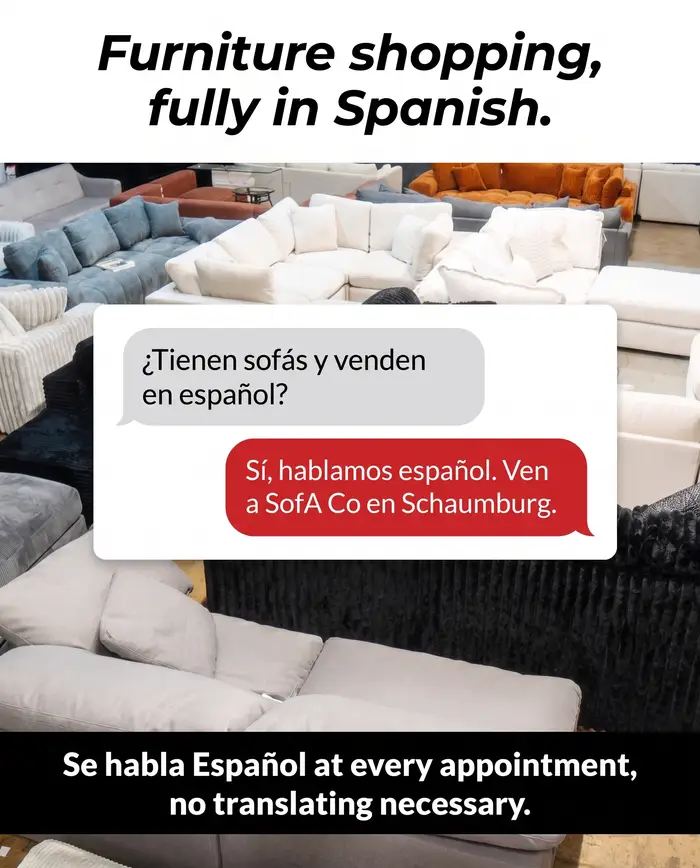
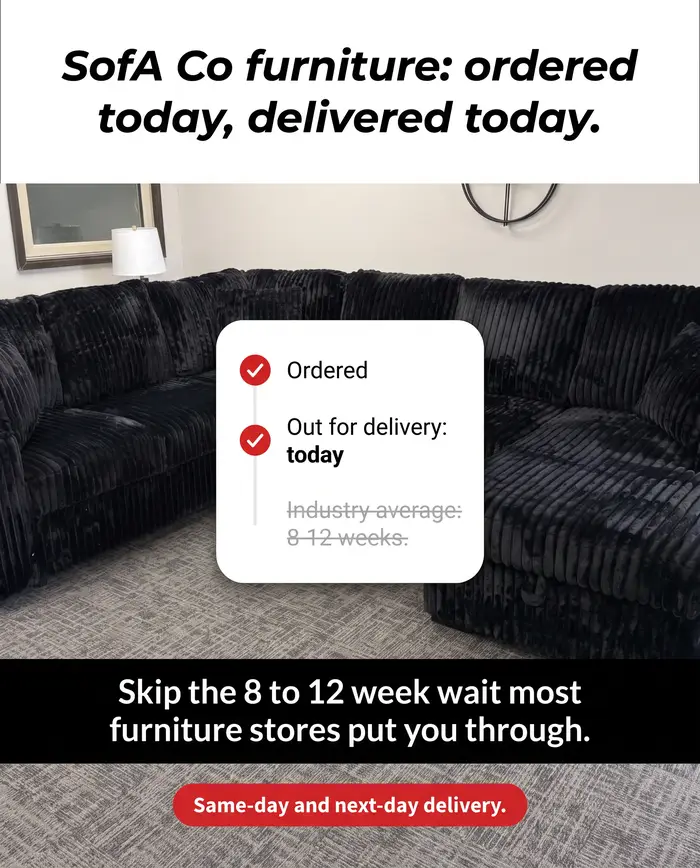
The person furnishing a first apartment is buying on price and will not drive anywhere without knowing the number first. The family upgrading after a second child is buying durability and wants to see the before and the after. The comparison shopper has already been to the big-box store and is asking why this one costs what it costs. The buyer who needs it this week is buying delivery, not furniture. A share of the local market shops in Spanish and gets sold to in English. And a quiet share of every showroom’s returns trace back to a question nobody asks early enough, which is whether the piece fits the room it is going into.
One general ad written for all of them speaks to none of them. That single observation shaped everything downstream: the offer page, the follow-up copy, and eight separate ad angles instead of one ad run eight times.
The second finding was about order. Starting with ad spend is tempting, because spend produces motion quickly. But a showroom with no follow-up and no reviews turns extra traffic into extra waste. Every visitor arriving before the pipeline existed would have landed in the same notebook. The pipeline had to come first, and the creative had to come after it.
How we rebuilt it
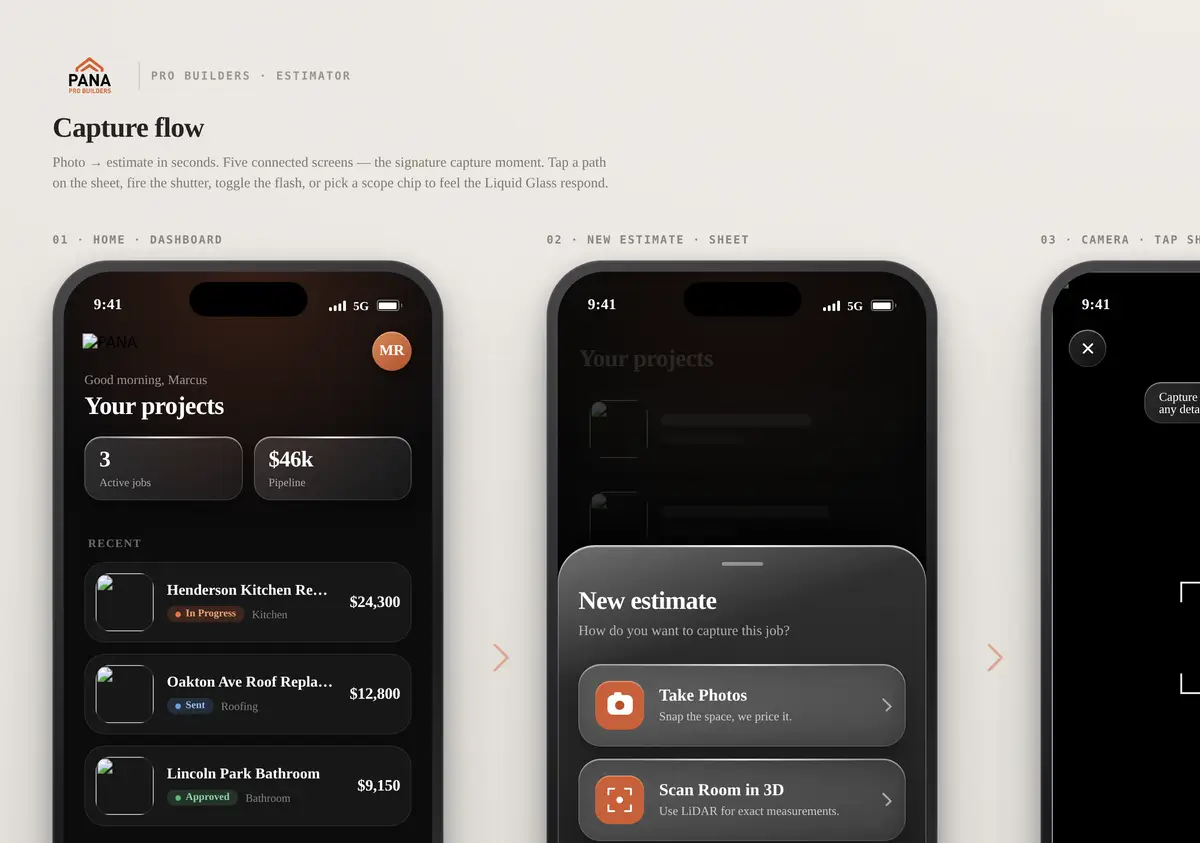
One page, one offer, one thing to click. The landing page does a single job: turn an ad click into a name and a number attached to one specific offer. No catalogue browse, no menu, no second call to action competing with the first. A furniture site with a thousand products is a good store and a bad landing page, so the store and the funnel were kept as two surfaces with two different jobs. The store is sofaofamerica.com. The funnel points at one offer at a time.
A CRM that owns the lead from the first click. Every lead lands in a CRM built for this account rather than in a shared inbox or a spreadsheet, tagged with the ad and the angle that produced it. The chain runs ad, landing page, CRM, SMS follow-up, calendar, showroom visit. None of the steps between those points is manual.
Follow-up that works on furniture time. The SMS follow-up answers questions, keeps a slow buyer warm across the days or weeks they take to decide, and books the showroom visit on its own without a person touching it. This is the piece that produced the number at the top of this page. For a showroom the visit is the conversion, not the click, and the visit rarely happens on day one.
A review engine pointed at every buyer. Instead of asking for reviews when someone remembers to, the ask runs against every completed purchase, at the point in the transaction where the customer is most willing to give one. The Google Maps profile went from zero to more than seventy reviews in three months.
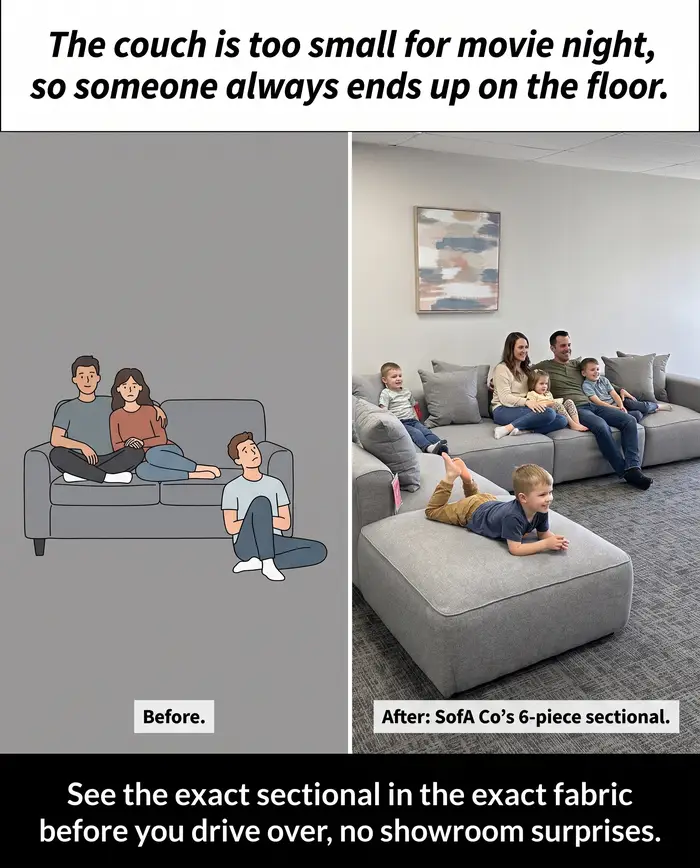
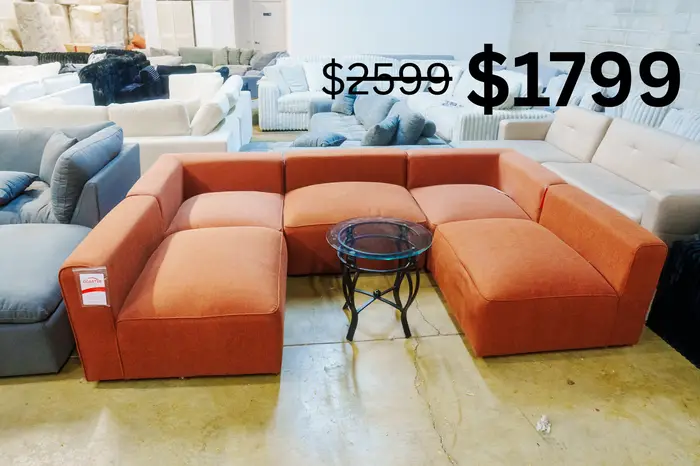
Creative built one persona at a time. Eight creatives across eight personas, one angle each, no repeats inside the batch: the price-anchored sectional campaign, the first-apartment furnisher, the Spanish-language angle, same-day delivery, the growing-family before and after, the big-box comparison table, the fabric range, and the catalogue-fit question. Thirteen offer statics and one finished video ad sit alongside them.
Each one went through the same production process every account here gets. Research first, from a live scrape, a Google Business Profile pull, a competitor set and the review export. Then six to eight personas, each carrying a stated objection rather than a demographic. Then one angle per ad, no repeats. Then the hard rules, which are the banned phrases and the brand constraints an ad is not allowed to cross. Then generation, three options at every decision, the strongest picked, and the reason it won written down. Then the claim check, where every figure printed on an ad is traced to a dated source file. Then a four-column compliance pass before release. That batch shipped on 14 August 2026, inside a run of thirty-two creatives across four accounts.
The August batch has been produced and it has not been put behind spend. There is no Ads Manager report for it, no cost per lead and no click-through rate, and none of those figures appears anywhere on this page.
The deliverables
- A single-offer landing page: one page, one offer, one thing to click
- Meta ad creative, static and video, built one buyer persona at a time
- A CRM set up end to end, from first click to booked showroom visit
- AI SMS follow-up that answers, nurtures and books the visit without a person touching it
- A review engine running against every buyer
- sofaofamerica.com, the store and the offer funnel kept as two separate surfaces


How it ran
- Starting positionWalk-in traffic only, no digital pipeline at all. Leads written into a notebook and going cold there. Zero reviews on the Google Maps profile.
- The buildMeta ads into a landing funnel, into a CRM, into AI SMS follow-up, into a calendar, into a showroom visit. Review engine pointed at every buyer.
- Three months inThe Google Maps profile passes seventy reviews, up from zero. Showroom visits running at 45+ a month.
- 14 August 2026Eight persona creatives clear claim check, inside a batch of thirty-two across four accounts. Thirteen offer statics and a finished video ad sit alongside them in the archive.
The results
- 45+
- Showroom visits booked a monthMeasured 2026
- 0 → 70+
- Google Maps reviews, from a standing start, in three monthsMeasured 2026
- 8
- Ad creatives produced, one buyer persona each, no repeatsMeasured 14 August 2026
- 13
- Offer statics produced alongside the persona setMeasured 14 August 2026
What the numbers say
Sofa Co books more than forty-five showroom visits a month through a pipeline that carries a lead from a Meta ad to a landing page to a CRM to SMS follow-up to a booked calendar slot, with no person in the middle. That is the number that matters for a furniture business, because a showroom closes in the room.
Sofa Co's Google Maps profile went from zero reviews to more than seventy in three months, from a standing start. Reviews are the second half of the same machine. Ads and follow-up bring one person to the door. Reviews are what convince the next one that the drive is worth making.
Eight persona-targeted ad creatives cleared claim check on 14 August 2026. Thirteen offer statics and one finished video ad sit alongside them in the archive, undated.
What is deliberately absent: any spend figure, any cost per lead, any click-through rate, any return on ad spend. The August creative has not run, so those numbers do not exist yet, and an invented one would be worth less than the gap. Because this is an own-business account, the live CRM and the booking calendar can be opened on a call instead of summarised in a screenshot.
Why it worked
Because the follow-up was built before the traffic was scaled.
The order carries the whole argument. Ads into a showroom with no follow-up produce a busier notebook. Ads into a showroom with follow-up but no reviews produce a person who checks the map and drives to a competitor instead. Each piece raises the value of the one before it, and the sequence only pays in one direction.
The second reason is that nothing generic shipped. Eight angles for eight buyers is more work than one ad, and it is the difference between a stranger seeing a sofa and a stranger seeing their own situation. The person furnishing a first apartment and the family replacing a worn sectional are not in the same market. Telling them the same thing wastes half the money by definition.
The third reason is unglamorous. Reviews and follow-up both work on traffic that has already been paid for. They cost attention rather than budget, and they raise the return on every ad that runs afterwards, which is why they were built before the ad account was asked to do anything harder.
The takeaway
If you run a showroom, count two things for last month. How many people gave you a name, and how many of them heard from you again. The gap between those two numbers, not the ad account, is usually where the money went. Fix the follow-up and the review flow first, because both work on traffic you are already buying.
Then write for the buyer you actually get rather than the one in the catalogue photograph. A showroom serves several different people who want contradictory things, and the ad that admits that will beat the ad that pretends otherwise.
What's live right now
Questions people actually ask
How do you get furniture shoppers to book a showroom visit instead of just browsing?
One offer at a time, and follow-up that does not stop after the first message. The Sofa Co funnel sends an ad click to a single-offer page, captures a name and a number, then hands the lead to SMS follow-up that answers questions and books the visit without a person touching it. That pipeline books more than forty-five showroom visits a month.
How long does it take to go from zero Google reviews to seventy?
Three months for Sofa Co, from a standing start. The speed comes from asking every buyer as part of the sale rather than running an occasional review push. Any showroom doing steady transaction volume has enough buyers to get there. The bottleneck is almost always the asking, not the willingness.
Does AI SMS follow-up work for a considered purchase like furniture?
It matters more there than on an impulse purchase, because the gap between the first conversation and the decision is exactly where furniture leads are normally lost. The follow-up keeps answering across that gap, and the booked showroom visit is the handoff back to a human. On this account the pipeline produces 45+ visits a month.
Why does this page show booking numbers but no cost per lead?
Because the creative batch built for Sofa Co in August 2026 has not been put behind spend. No Ads Manager report, cost per lead or click-through rate exists for it, so none is printed here. The booking and review figures come from the pipeline itself and are shown. The advertising performance figures are not, because they have not been measured yet.